
I’ll never forget the snake plants in the window of the barber shop where I grew up. They were numerous, huge, and honestly—a pretty spectacular sight.
Those towering, architectural beauties made such an impression on me that I always wanted one, but back then, snake plants weren’t something you could easily buy. They were “pass along plants,” shared between neighbors and friends, passed down through generations.
Fast forward years later to a walk through my Port Richey, Florida neighborhood. My husband and I spotted snake plants growing abundantly in a neighbor’s side yard. The neighbor happened to be outside, so I stopped to tell him how great they looked—what a perfect addition to his landscape! One friendly conversation later, I went home with a few snake plant cuttings of my own.
Since then, these little survivors have thrived through all kinds of Florida chaos—weeks without water, blazing summer heat, and more than a few bouts of neglect. Yet they just keep growing, sending out baby plants (called “pups”) and even blooming! That’s the magic of the snake plant: it rewards you with new life, even when you forget about it for a while.
Funny how things come full circle. Those same snake plants that once sat quietly in barbershop windows are now all over social media and design magazines. They’re finally getting the recognition they deserve—and honestly, it’s about time.

Why Snake Plants Are Absolutely Amazing
When it comes to easy-care houseplants, the snake plant (Dracaena trifasciata) is in a league of its own. Once known as Sansevieria, this bold, sculptural plant has earned nicknames like Mother-in-Law’s Tongue and Viper’s Bowstring Hemp—and for good reason.
Snake plants are the true superheroes of the houseplant world: low-maintenance, air-purifying, and nearly impossible to kill. Whether you’re new to indoor gardening or simply want something beautiful that doesn’t need constant attention, this is the plant to start with.
The Perfect Plant for Real Life
Here’s the truth: the snake plant is perfect for people who love plants but don’t love fuss. It thrives on neglect, tolerates forgetful watering, and asks for almost nothing in return.
If you’ve ever said, “I can’t keep anything alive,” this is your redemption plant. Whether you travel often, work long hours, or just forget your plants exist until Saturday morning coffee—snake plant care is simple, forgiving, and low stress.
Pro Tip: The quickest way to kill a snake plant is to love it too much. Let that soil dry completely between waterings.
They’re Practically Indestructible
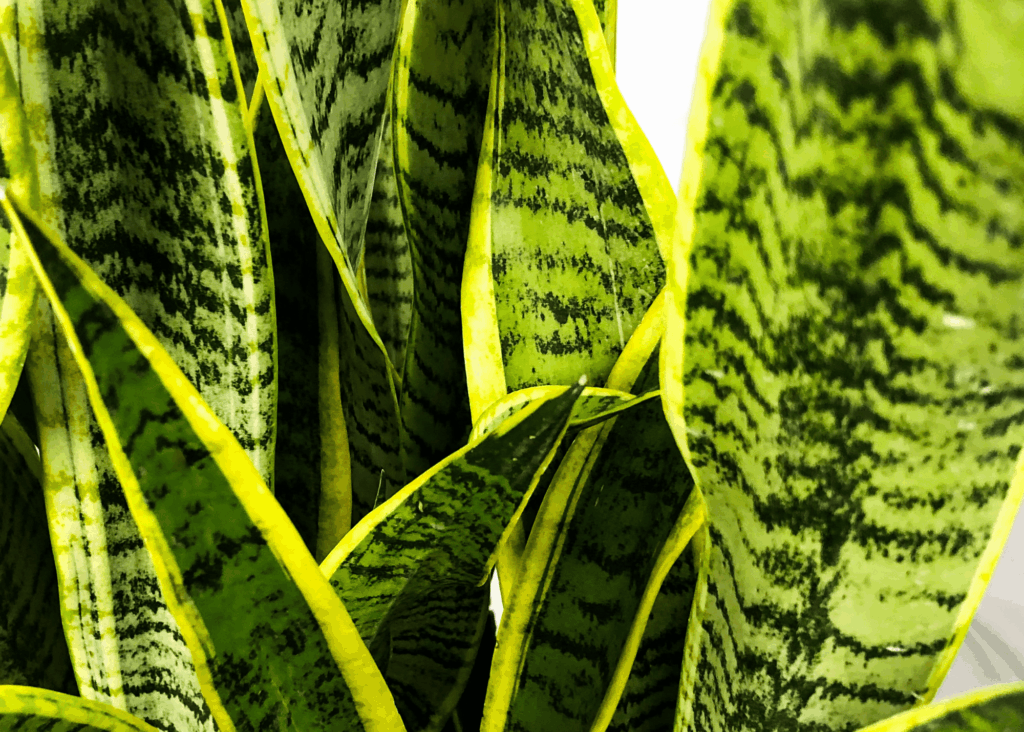
Think of the snake plant as the “set-it-and-forget-it” houseplant. Forget to water for weeks? No problem. Leave it in a low-light corner? Still fine. Their thick, upright leaves store water like tiny canteens, helping them handle drought, heat, and even air-conditioning with ease.
This is the plant equivalent of that dependable friend who never complains and always shows up when you need them.
They Clean Your Air While You Sleep
Here’s one of the coolest facts about snake plants—they purify your air even at night. Unlike most plants that rest after dark, snake plants convert carbon dioxide into oxygen while you sleep.
NASA’s Clean Air Study also found that snake plants remove toxins like formaldehyde and benzene from indoor air. That makes them a great choice for bedrooms, offices, and any space where you want fresher air and less effort.
Fun Fact: One large snake plant can noticeably improve the air quality in a small bedroom.
They’re Trend-Proof
Snake plants were icons of mid-century homes, quietly thriving in windowsills and barber shops everywhere. They dipped out of style for a while, but they’re back in a big way—and honestly, they never really left.
Today, interior designers call them “architectural statement plants.” Gardeners call them “indestructible.” Either way, Dracaena trifasciata proves that true classics never fade.

Snake Plant Profile: Quick Facts at a Glance
Botanical Name: Dracaena trifasciata (formerly Sansevieria trifasciata)
Common Names: Snake Plant, Mother-in-Law’s Tongue, Viper’s Bowstring Hemp
Native To: West Africa (from Nigeria to the Congo)
Light Requirements: Low to bright, indirect light (highly adaptable)
Water Needs: Low—drought tolerant, prefers to dry out completely between waterings
Soil Type: Well-draining cactus/succulent mix or potting soil with added perlite
Toxicity: Mildly toxic to cats and dogs if ingested (keep out of reach of curious pets)
Growth Rate: Slow to moderate
Mature Size: 1–4 feet tall depending on variety (up to 6+ feet in ideal conditions)
Special Features:
- Air-purifying; removes formaldehyde, benzene, and other toxins
- Produces oxygen at night
- Occasionally blooms with fragrant, tubular flowers
- Readily produces new “pups”
Best For: Beginners, busy people, forgetful waterers, low-light rooms, bedrooms
Pro Tips: The Real Secrets
Even though snake plant care is simple, there are a few insider tips that can keep yours thriving for decades. These little tweaks make the difference between a plant that just survives and one that truly shines.

The Golden Rule: When in Doubt, Don’t Water
Overwatering is the number one cause of snake plant trouble. Their thick leaves are natural water reservoirs, so they need time to dry out completely before you give them another drink.
If you’re unsure, stick your finger an inch or two into the soil — if it feels even slightly damp, wait a few more days. Yellow or mushy leaves mean you’ve been too generous with water.
Pro Tip: During Florida’s humid months (or anywhere with high humidity), snake plants may need water only once every 3–4 weeks.
Repotting Reality
Snake plants actually prefer to be a little cramped. Being slightly root-bound helps them grow strong and even encourages blooming. You only need to repot every two or three years, or when you see roots pushing through the drainage holes.
Choose a sturdy pot with good drainage, and when you do repot, let the plant rest a few days before watering.

Pest Patrol
One of the best parts of owning a snake plant is how rarely it attracts pests. Still, if the air is extremely dry, you might see the occasional spider mite. Wipe down the leaves every month or two with a soft, damp cloth — it keeps dust off, deters pests, and makes those upright leaves gleam.
A gentle mix of water and mild dish soap works well for cleaning.
Want More Snake Plants? Propagation Is Easy!
One of the joys of growing snake plants is how easily you can multiply them. There are two simple methods:
Division: When you repot, gently separate the “pups” — the baby plants that grow around the base of the mother plant. Each pup can become its own thriving plant in no time.
Leaf Cuttings: Cut a healthy leaf into 3–4 inch sections and place the cut ends in moist soil (or water) until roots form. It’s a slow process, but deeply satisfying to watch new life emerge.
Fun Fact: Every snake plant pup is genetically identical to its parent — like a perfect little clone!
The Secret Bloom (Yes, They Actually Flower!)
Here’s something many people don’t know: snake plants can bloom! And if yours has, congratulations — you’re officially a snake plant whisperer.

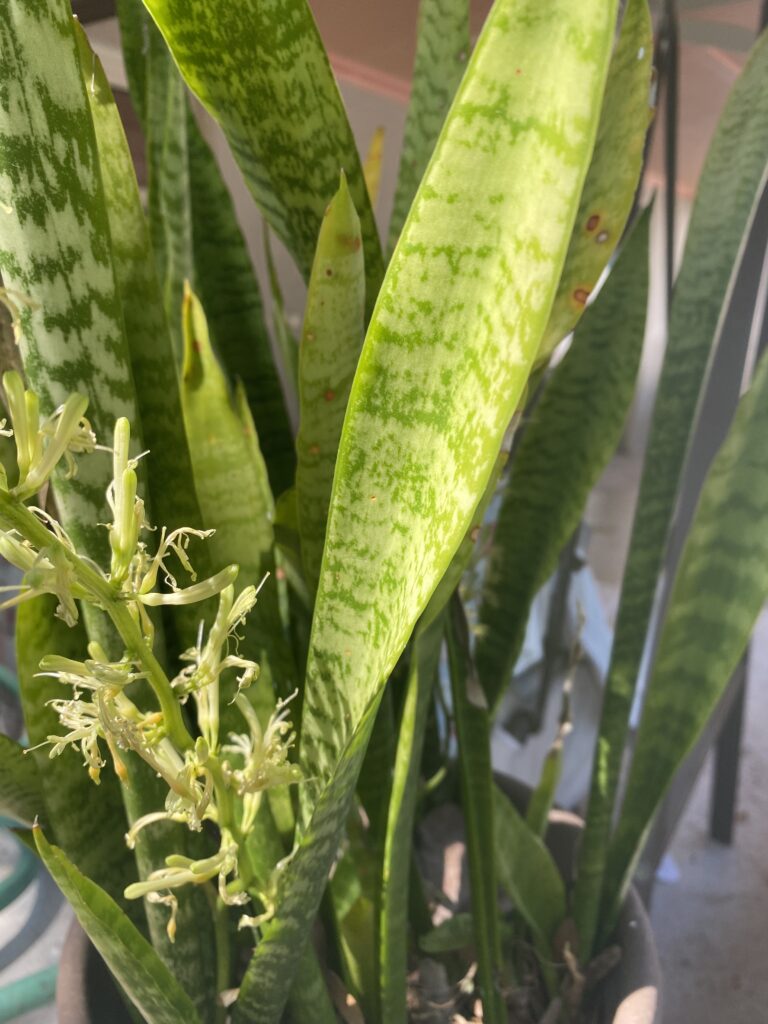
The flowers appear on tall, slender stalks and are usually white or pale cream with a faint greenish tint. The best part? Their fragrance. The blooms release a soft, sweet, almost honey-like scent that fills a room at night — a rare treat for such a low-maintenance plant.
When my own snake plants have bloomed (and they actually have several times), they were a bit overcrowded — what I’d call comfortably root-bound. In fact, one year I went to repot a potful and spotted a flower stalk peeking up through the leaves!
So, what makes a snake plant decide to flower? It’s a little mysterious. Blooming often happens when the plant is slightly root-bound or after a period of mild stress followed by better care — like a reward for patience. Some people never see a bloom, while others enjoy them regularly. There’s no set formula, which makes it all the more special when it happens.
When your plant blooms, simply enjoy it. The flowers last for weeks. You might notice a bit of sticky nectar — that’s normal. Just wipe it up so it doesn’t attract pests, and once the blooms fade, trim the stalk at the base.
Popular Varieties to Know
While the classic green-and-yellow striped Dracaena trifasciata ‘Laurentii’ is the most recognizable, there are many stunning snake plant varieties worth collecting:
- ‘Black Gold’: Deep green leaves outlined in gold. Elegant and dramatic.
- ‘Moonshine’: Silvery, pale green leaves that add a soft, modern touch.
- ‘Bantel’s Sensation’: Narrow white vertical stripes on dark green leaves — striking and rare.
- Cylindrical Snake Plant: Round, spiky leaves that grow upright like sculptural fingers.
- ‘Whale Fin’: A single, wide paddle-shaped leaf that looks like modern art.

The Bottom Line
If you’ve got a few snake plants sitting around “awaiting some love,” here’s your permission to keep things simple. These plants don’t need elaborate routines or daily check-ins. They need occasional watering, decent light, and a little space to thrive.
In return, they’ll clean your air, add architecture to your décor, and quietly reward you with new growth year after year.
Sometimes, the best plant care is knowing when to do nothing at all.
What’s your favorite snake plant variety? Share your photos and care tips with us at Thimble & Tansy—we’d love to see your collection!
Until we meet in the garden again!
Cindi