Every Christmas, the garden centers and grocery stores fill up with poinsettias.
Red ones. White ones. Pink ones. Even some that have been sprayed with glitter.
They’re pretty, but this year I wanted to look beyond the traditional poinsettia and find a few other plants that could brighten my home during the holidays.
There was just one small complication.
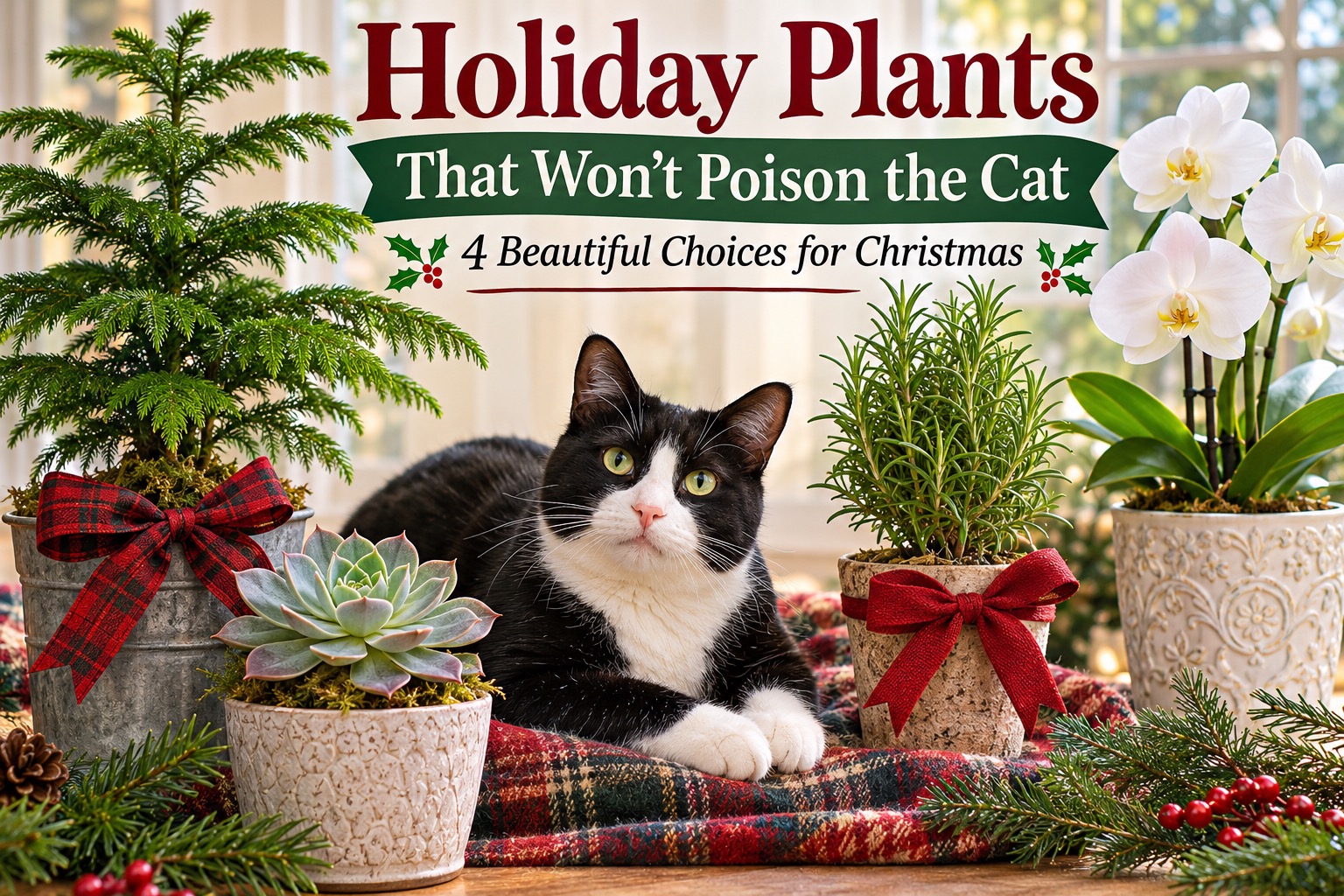
His name is Chester.
Meet Chester, My Plant-Loving Cat
If you’re new to Thimble & Tansy, you probably haven’t met Chester.

Chester is my male tuxedo cat, and he loves plants.
He likes to nuzzle them. He likes to smell them. And he especially likes to eat them.
Apparently, in Chester’s world, anything green is a potential salad.
So when I’m choosing plants for my home, I pay particular attention to whether they’re safe around pets. I also think about households with small children, who can be every bit as curious as Chester.
Even plants considered non-toxic can cause stomach upset if pets or children eat enough of them. And a plant that’s safe for cats isn’t automatically safe for every animal or person.
For this article, I’ve chosen to avoid several popular holiday plants that have known toxicity concerns, including:
- Holly: The berries can cause vomiting and diarrhea.
- Cyclamen: Toxic if eaten, with the tubers presenting particular concern.
- Amaryllis: Contains toxic substances, especially concentrated in the bulbs.
- Paperwhite narcissus: Toxic, particularly the bulbs.
- Kalanchoe: Toxic to cats and dogs; some species contain compounds that can affect the heart.
- Anthurium: Contains calcium oxalate crystals that can irritate the mouth and throat.
Poinsettias, incidentally, aren’t nearly as poisonous as their reputation suggests. They can cause mild irritation or stomach upset, but serious poisoning is uncommon.
I’m simply ready for something different.
So I narrowed my choices to four plants that are generally considered non-toxic to cats and dogs, look lovely during the Christmas season, and can continue growing after the decorations come down.
1. Norfolk Island Pine: A Living Little Christmas Tree
A Norfolk Island pine makes a charming alternative to a traditional tabletop Christmas tree.
With its soft-looking branches and symmetrical shape, it already looks festive without much help.
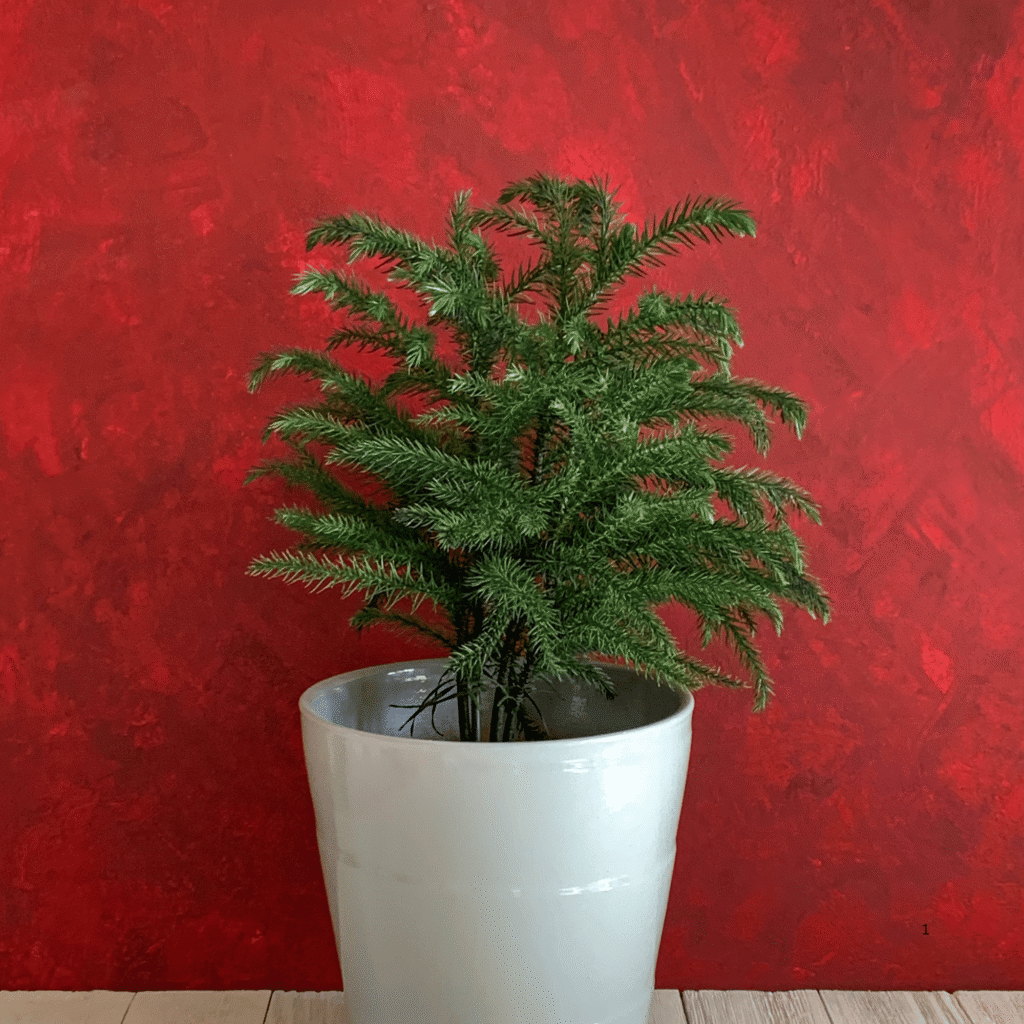
You’ll often find them in stores during November and December, sometimes decorated with tiny ornaments or bows.
Despite its name, the Norfolk Island pine isn’t a true pine. It’s a tropical evergreen that can grow into a very large tree outdoors in suitable climates.
How to Care for It
- Light: Give it plenty of bright light. Some gentle direct sunlight is beneficial.
- Water: Water when the upper inch or so of soil begins to dry. Don’t let the pot sit in water.
- Humidity: It appreciates humidity, particularly in homes with dry indoor air.
- Temperature: Keep it away from cold drafts and heating vents.
A Florida Warning: That Little Christmas Tree Can Become a Monster
Our first Florida home had a Norfolk Island pine planted right next to the house.
And when I say it was big, I mean monstrously big.
The lower branches reached all the way to our neighbor’s house, which was a normal distance away. The tree towered over our roof and completely blocked the sunlight coming through two of our windows.
It was enormous.
We eventually had it cut down. It was simply too big for the space.
And there’s another consideration for Florida homeowners: hurricane season.
Mature Norfolk Island pines can suffer serious damage during tropical storms and hurricanes. Strong winds can break branches, strip much of the foliage from one side, or even topple trees under certain conditions.
A damaged tree can become an expensive problem, especially when it’s growing close to a house.
My advice? Enjoy your little Norfolk Island pine as a Christmas decoration and keep it in a container. Give it room to grow, and repot it as needed.
But think very carefully before planting it in your Florida yard, particularly anywhere near a house.
That adorable little tabletop Christmas tree has ambitions.
And believe me, they’re enormous.
Chester Consideration
Norfolk Island pine is generally considered non-toxic to cats and dogs, but that doesn’t mean it’s a good snack. Chewing the needles or swallowing plant material may cause mouth irritation, vomiting, or digestive upset.
Holiday decorations can create additional problems. Tinsel, ribbons, dangling ornaments, artificial snow, and glitter may be more dangerous to a curious cat than the tree itself.
And because Chester considers anything green a potential salad, I’d still keep this little Christmas tree somewhere he can’t easily reach.
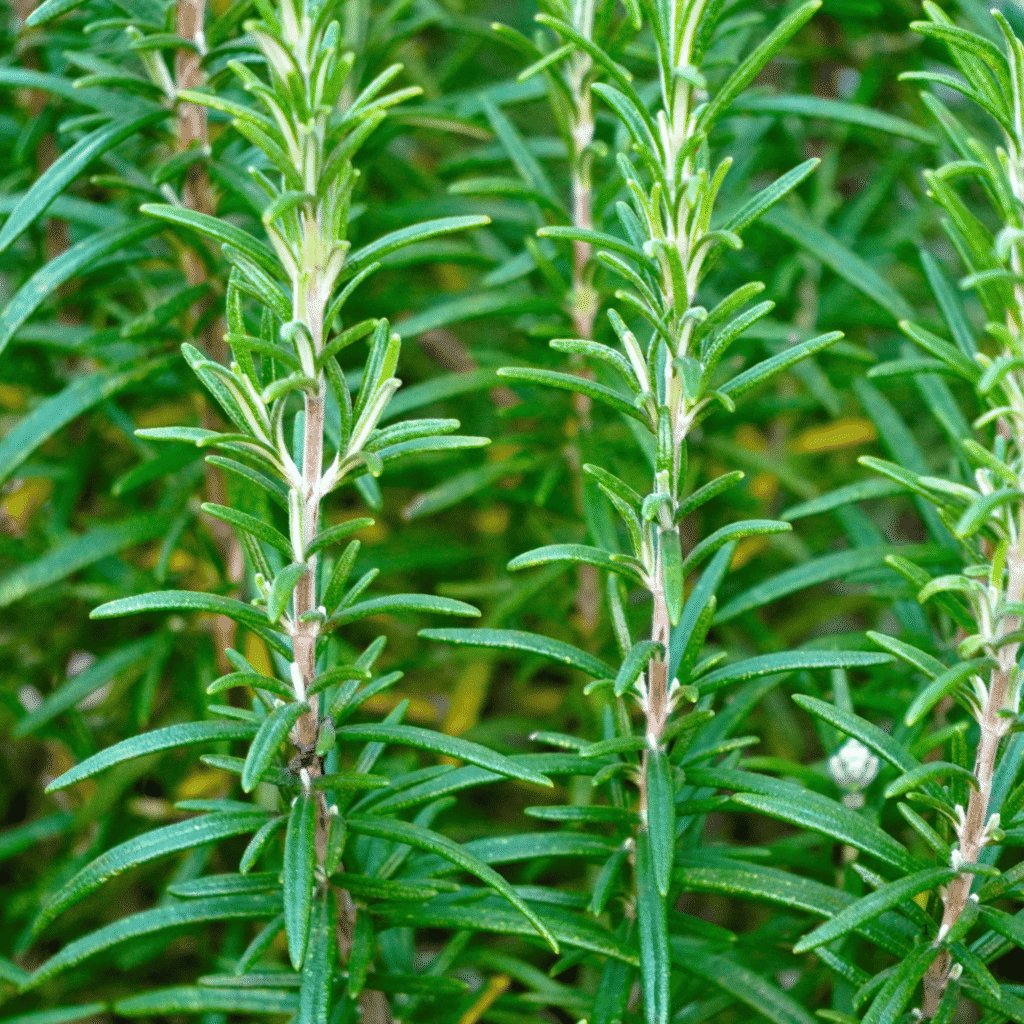
2. Rosemary: A Christmas Tree You Can Cook With
I love the idea of a plant that’s both attractive and useful.
Around Christmas, rosemary is sometimes sold trimmed into the shape of a miniature Christmas tree.
It’s fragrant, evergreen, and looks lovely in a simple pot with a ribbon.
And unlike many decorative holiday plants, rosemary has a practical purpose in the kitchen.
How to Care for It
- Light: Rosemary needs plenty of sunshine. A sunny window may work temporarily, but outdoors in suitable weather is usually better.
- Water: Let the upper soil dry somewhat between waterings. Rosemary doesn’t like soggy roots.
- Soil: Use a well-draining potting mix and a container with drainage holes.
- Air circulation: Good airflow helps keep the plant healthy.
After Christmas
Remove the holiday decorations and keep growing it as an herb.
Here in Florida, rosemary can be challenging during our humid, rainy summers. Excellent drainage and good air circulation are especially important.
If you’re buying a rosemary topiary with plans to use it for cooking, make sure it hasn’t been treated with products unsuitable for edible herbs.
Chester consideration: Rosemary is considered non-toxic to cats and dogs. I would still discourage chewing and avoid applying essential oils or concentrated fragrances to the plant.
And if Chester leaves it alone, I might even get to use some rosemary for dinner.
3. Echeveria: A Little Holiday Color Without the Glitter
Echeverias are beautiful succulents with rosettes of fleshy leaves.
Depending on the variety, they may be pale green, blue-gray, pink, or tinged with red.
They’re lovely on their own, but they can also be incorporated into simple Christmas arrangements.
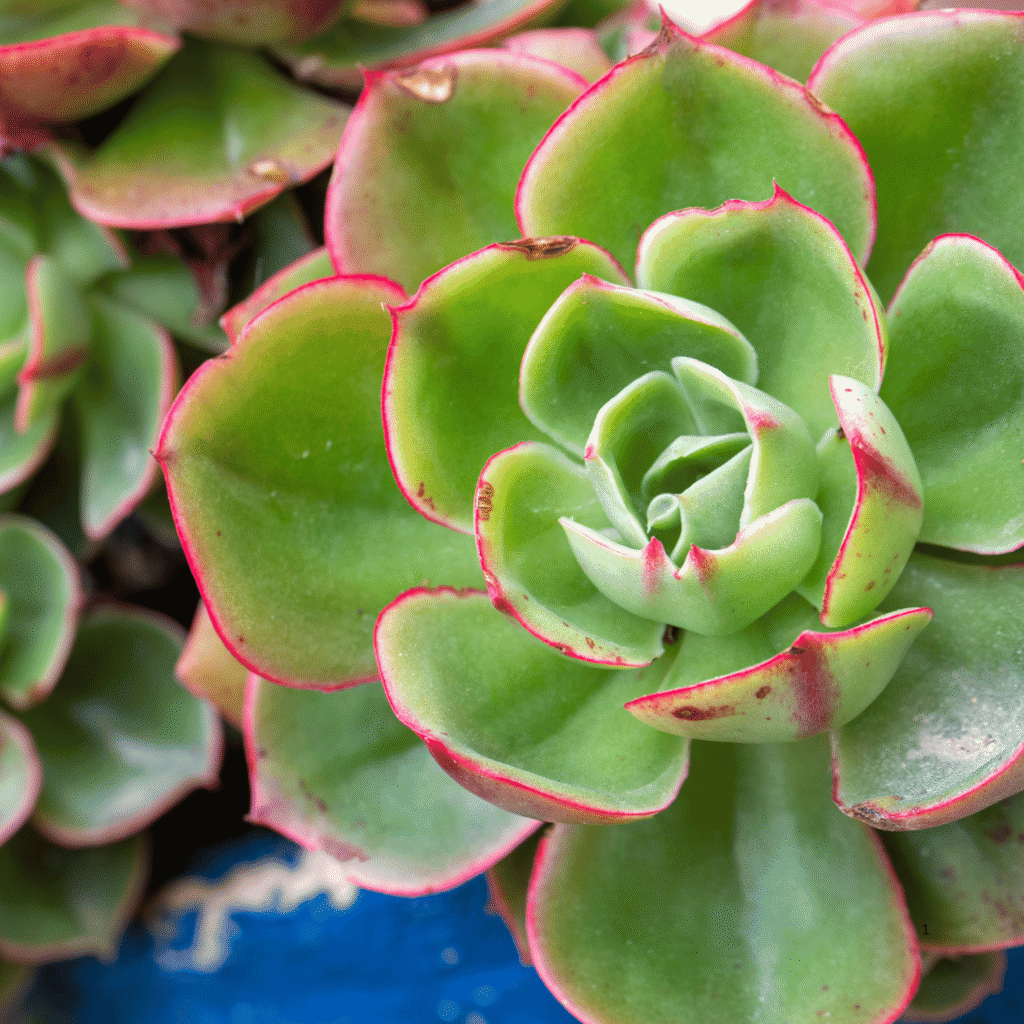
A few echeverias in a pretty container, surrounded by natural decorations, can make an attractive centerpiece without looking like the Christmas aisle exploded on the dining room table.
How to Care for Them
- Light: Give them bright light, including some direct sun when appropriate.
- Water: Allow the soil to dry between thorough waterings.
- Soil: Use a fast-draining succulent mix.
- Container: Drainage holes are essential.
After Christmas
Echeverias can remain attractive houseplants or container plants throughout the year.
Our Florida humidity and frequent summer rain can be hard on some echeverias. I prefer keeping them in containers where I can control the watering and protect them from prolonged rain.
One advantage of echeveria is that it doesn’t need to look particularly Christmasy. Once the holidays are over, remove the seasonal decorations and it’s still a beautiful plant.
Chester consideration: Echeveria is generally considered non-toxic to cats and dogs. Be sure the plant is correctly identified, since not every succulent is pet-safe.
4. White Phalaenopsis Orchid: Elegant Christmas Flowers
If you’re looking for something a little more elegant, consider a white Phalaenopsis orchid, commonly called a moth orchid.
There’s something beautiful about those graceful stems of white flowers.
Place one in a simple ceramic pot, perhaps with a little Christmas greenery nearby, and you have an arrangement that looks festive without being overdone.
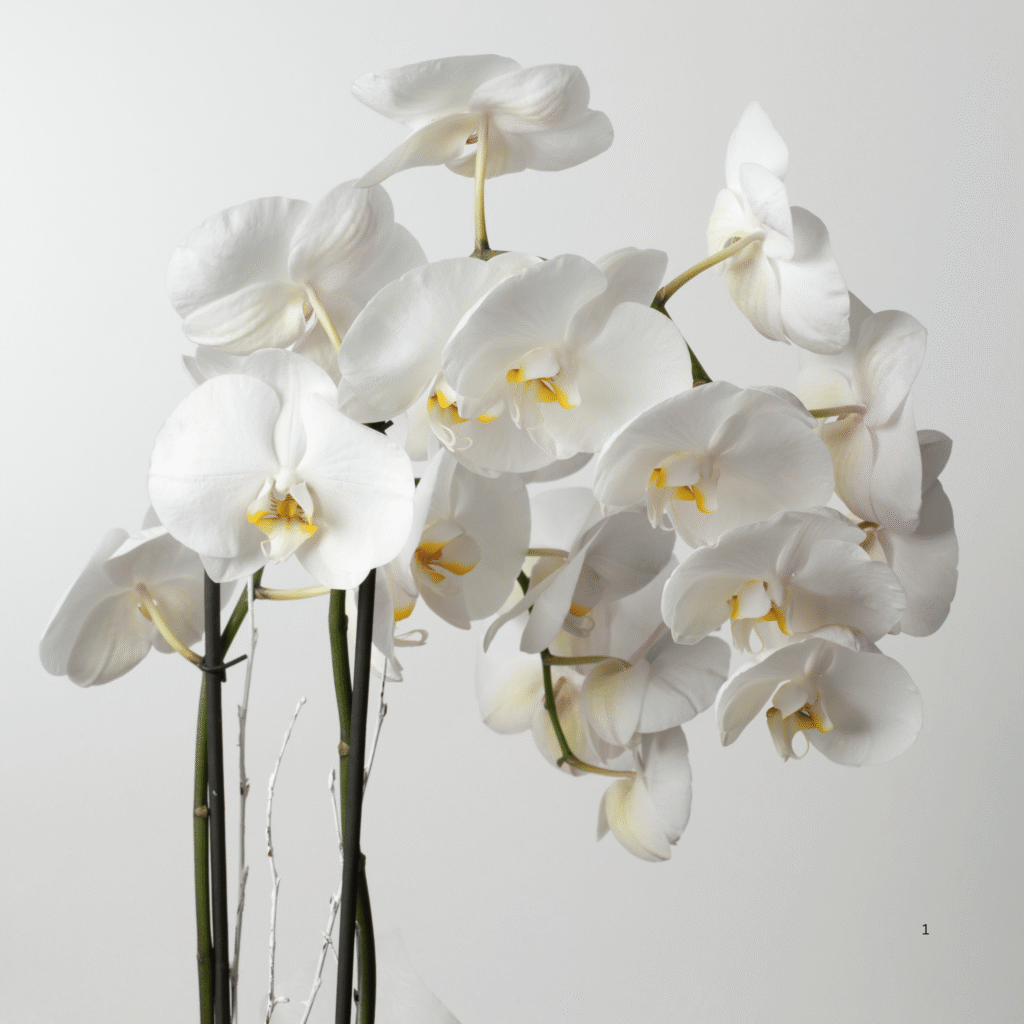
And unlike some holiday plants that seem determined to collapse the moment Christmas is over, a healthy Phalaenopsis orchid can keep its flowers for weeks or even months.
How to Care for It
- Light: Bright, indirect light is ideal. Avoid prolonged harsh afternoon sun.
- Water: Water when the potting medium is approaching dryness. Don’t leave the roots sitting in water.
- Potting medium: Orchids generally need an airy mix, often containing bark, rather than ordinary potting soil.
- Temperature: Normal indoor temperatures usually suit them well. Protect them from cold drafts.
- Drainage: Make sure excess water can escape, especially if the orchid sits inside a decorative outer pot.
One common mistake is treating an orchid like an ordinary houseplant.
Its roots need air as well as moisture. Constantly wet potting medium can lead to root rot.
And there’s no need to water with ice cubes. Room-temperature water works perfectly well.
After Christmas
When the flowers eventually fade, don’t assume the plant is finished.
Phalaenopsis orchids can bloom again with proper care.
Keep the plant in bright, indirect light, continue watering appropriately, and use a suitable orchid fertilizer according to its directions.
A healthy plant may produce another flower spike after a period of growth. Slightly cooler nighttime temperatures can help encourage blooming.
A Florida Note
Orchids can do beautifully in Florida.
Many people grow Phalaenopsis orchids outdoors in protected, shaded locations during warm weather. Just remember that they’re tropical plants and need protection when temperatures drop.
Chester consideration: Phalaenopsis orchids are listed as non-toxic to cats and dogs. However, I wouldn’t encourage Chester to chew the flowers or leaves. Even a non-toxic plant can cause digestive upset if enough is eaten.
And frankly, I’d prefer to admire those beautiful white flowers rather than find them scattered across the floor.
At a Glance: Four Christmas Plants Worth Keeping
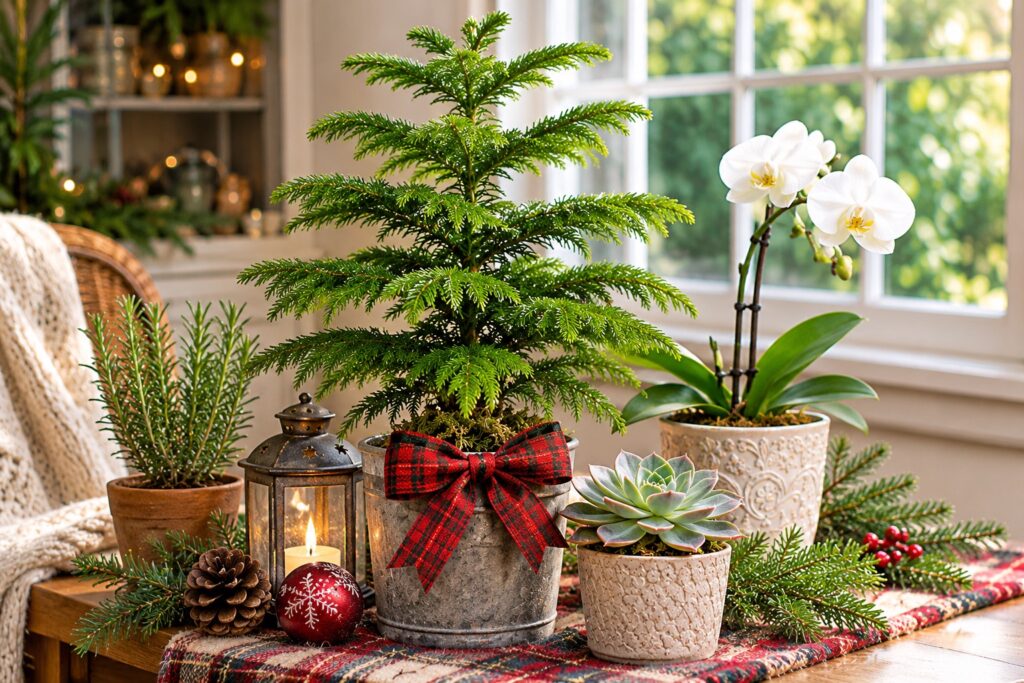
| Plant | Light | Watering | After Christmas |
|---|---|---|---|
| Norfolk Island pine | Bright light | Water when upper soil begins to dry | Keep as a houseplant |
| Rosemary | Full sun or very bright light | Allow upper soil to dry | Grow as a culinary herb |
| Echeveria | Bright light, some direct sun | Let soil dry between waterings | Keep as a succulent |
| White Phalaenopsis orchid | Bright, indirect light | Water as orchid medium approaches dryness | Encourage future blooms |
A Few Precautions Before Bringing Holiday Plants Home
Even when a plant is considered non-toxic, I think a little common sense goes a long way.
Remember that non-toxic doesn’t mean edible. Even pet-friendly plants can cause irritation or digestive upset when chewed or swallowed.
Check the botanical name. Common names can be misleading, and plants that look similar may have very different toxicity profiles.
Watch the decorations. Tinsel, ribbons, artificial snow, glitter, and small ornaments can create hazards entirely separate from the plant.
Be careful with fertilizers and treatments. A pet-friendly plant doesn’t mean every product applied to it is safe.
Keep plants out of reach when possible. This is easier said than done when you live with a cat who considers climbing a personal achievement.
And if a child or pet eats an unknown plant, don’t assume it’s harmless. Identify the plant and contact the appropriate poison-control service or veterinarian for advice.
Christmas Plants That Last Beyond Christmas
One of the things I like most about these four plants is that they aren’t disposable holiday decorations.
The Norfolk Island pine can become a handsome houseplant, although I strongly recommend keeping that one in a container!
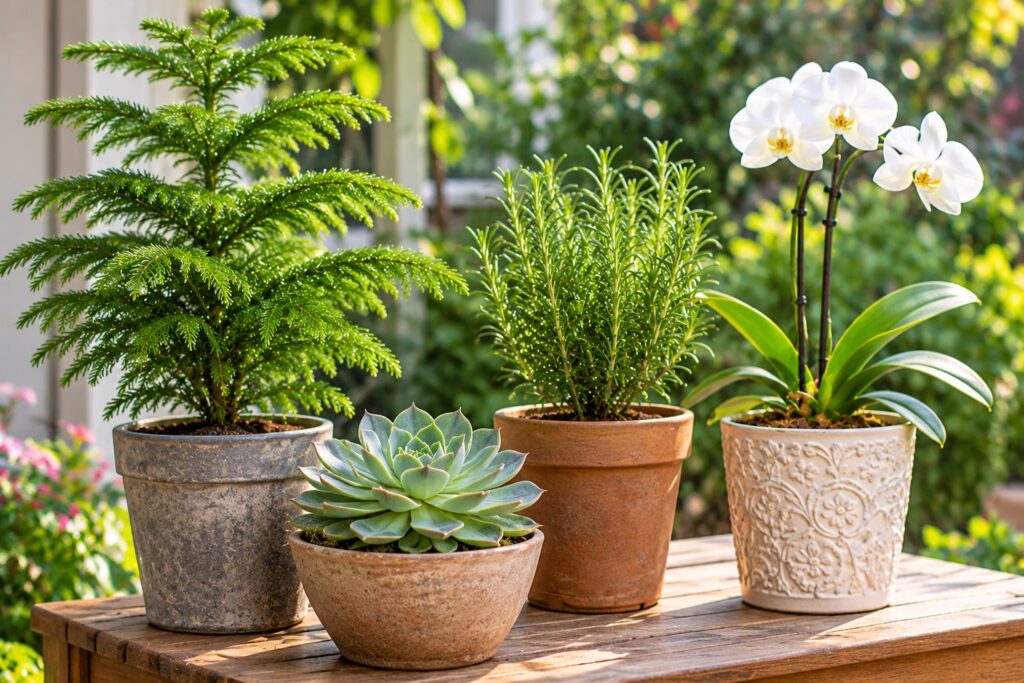
Rosemary can provide fresh herbs for cooking.
Echeverias are attractive throughout the year.
And a white Phalaenopsis orchid can reward you with another beautiful display of flowers.
I like the idea of decorating with something that continues to have a place in my home after the Christmas decorations are packed away.
And I especially like choosing plants that don’t pose a known poisoning hazard to Chester.
Of course, Chester would probably prefer that I bring home an entire greenhouse and let him sample the merchandise.
That is not happening.
At least, not if I can help it.
Do you decorate with living plants at Christmas? Do you have a favorite that lasts beyond the holidays? And if you share your home with a plant-loving pet, how do you keep your greenery safe?