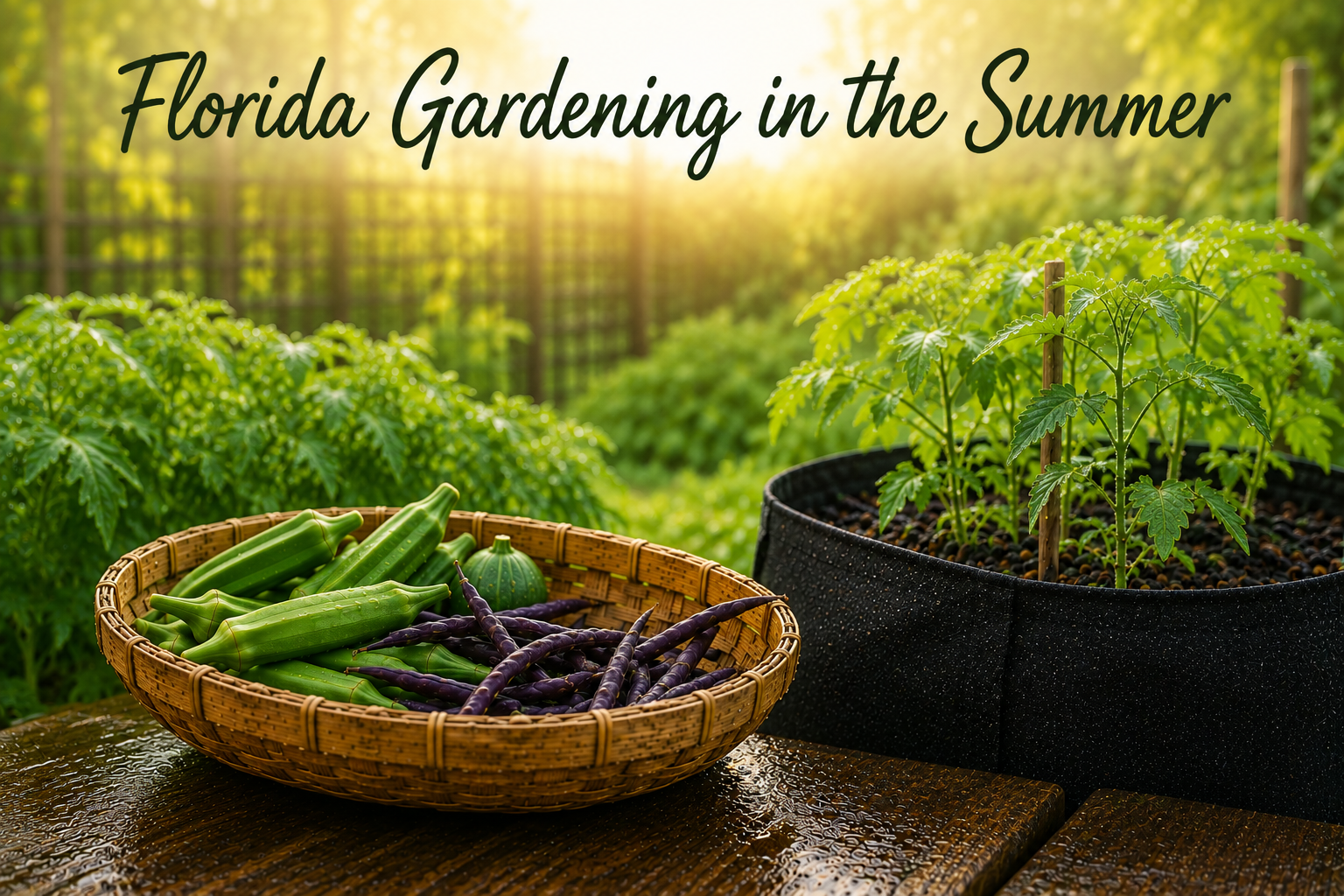
When my son was little, we had an evening ritual.
“Let’s go to Mommy’s store,” I’d say.
We’d walk out to the backyard together, and he’d pick out vegetables for dinner right off the plants. No cart. No checkout line. Just a little boy choosing his own supper from the garden.
That memory still makes me smile.
But if my son asked to visit Mommy’s store this summer, we wouldn’t have found much.
My gardening brain still thinks I’m living in Indiana.
I’ve gardened most of my life, and old habits die hard. Plant Memorial Day weekend. Clean up Labor Day weekend. That’s the calendar still tucked away in my head, even though I know better by now.
The problem is, that calendar was built for Indiana soil and Indiana seasons.
I live in Zone 10A now, on the Gulf Coast of Florida, where summer isn’t necessarily the grand finale of the vegetable garden.
Sometimes it’s the season you simply survive.
A Fight on Every Front
This summer certainly felt like one.
First we had heat and drought.
The birds and squirrels dug up seeds before they had a chance to sprout. Then the rabbits discovered that apparently I had planted the garden specifically for them.
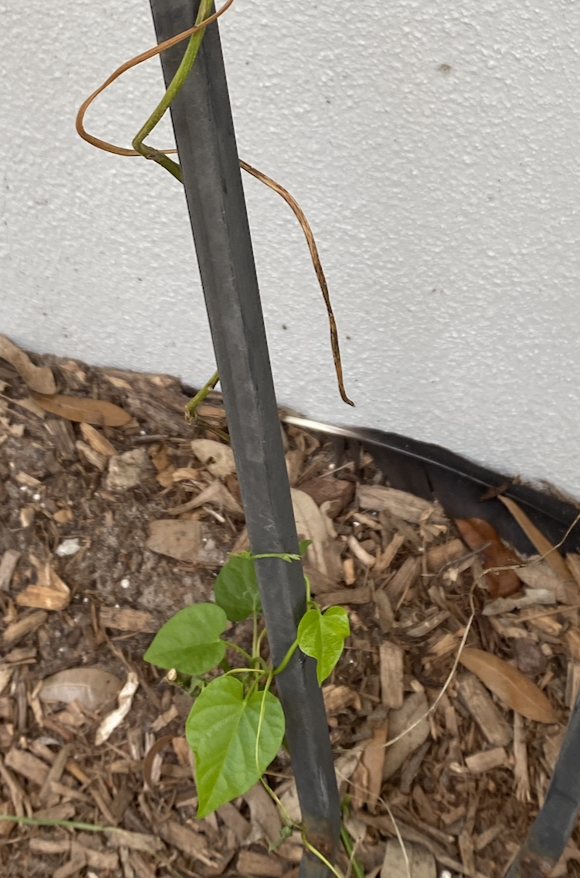
Morning glory? Delicious.
Moonflower? Gone.
Four o’clock seedlings? Every last one.
Even the flowers on my night-blooming cereus weren’t safe.
I planted Everglades tomatoes because they’re supposed to handle Florida’s heat and humidity better than the tomatoes I was accustomed to growing.
The tomato hornworms thought that was an excellent idea.
They stripped one plant completely bare.
Then, after weeks of wishing for rain, we got rain.
And more rain.
And more rain.
At one point, what I had could hardly be called a garden.
It was a swamp with survivors in it.
Surely the Beans Will Save Me
Earlier in the year, I’d tried garbanzo beans. Only a few came up, and they were so tiny that eventually I gave up and pulled them.
In went Jacob’s Cattle beans and okra.
The okra handled summer like a champ.
Heat? Fine.
Humidity? Fine.
Rain? Fine.
Florida seemed to throw everything it had at the okra, and the okra basically shrugged.
The Jacob’s Cattle beans looked promising, too.
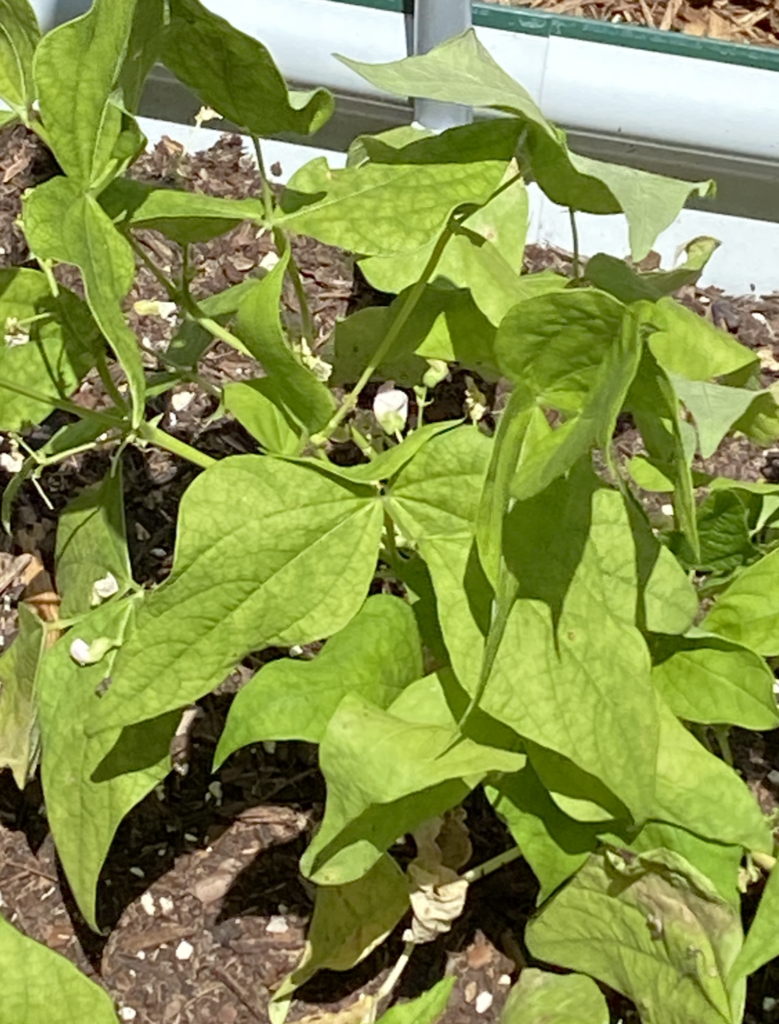
They grew. They looked healthy. And then they started flowering.
I was thrilled.
Except the flowers dropped.
More flowers came. They dropped too. No beans.
Most likely, the problem was our summer weather. Beans can grow perfectly healthy vines in the heat, but high temperatures—especially warm nights—can interfere with pollination and cause the blossoms to abort before a pod forms. Add our swings between drought and heavy rain, and my Jacob’s Cattle beans were flowering under some pretty lousy bean-making conditions.
I kept watching and waiting, hoping the weather would change enough for the plants to finally set pods.
It didn’t.
Eventually, the plants dried up and died.So much for that harvest.
And Then There Were the Things I Never Planted
The sweet potato slips didn’t make it either.
I had cataract surgery this summer — one eye one week and the other the next — which meant I wasn’t outside taking care of the garden for a while.
That was enough.
The slips died.
The peanuts?
Never even made it into the ground.
And then there was the roselle.
I had plans for that roselle. I was absolutely going to plant it.
I even had an empty grow bag waiting after the hornworms finished demolishing the tomato.
The seed packet sat on the shelf.
And sat.
And sat.
The roselle never got planted.
There. I’ve confessed.
Maybe Summer Isn’t My Season
For years, I’ve mostly sat out the Florida summer vegetable garden.
I weed. I clean things up. I keep a few tough plants alive. And I wait for fall.
This year I decided I was going to do better.
I was going to garden through summer.
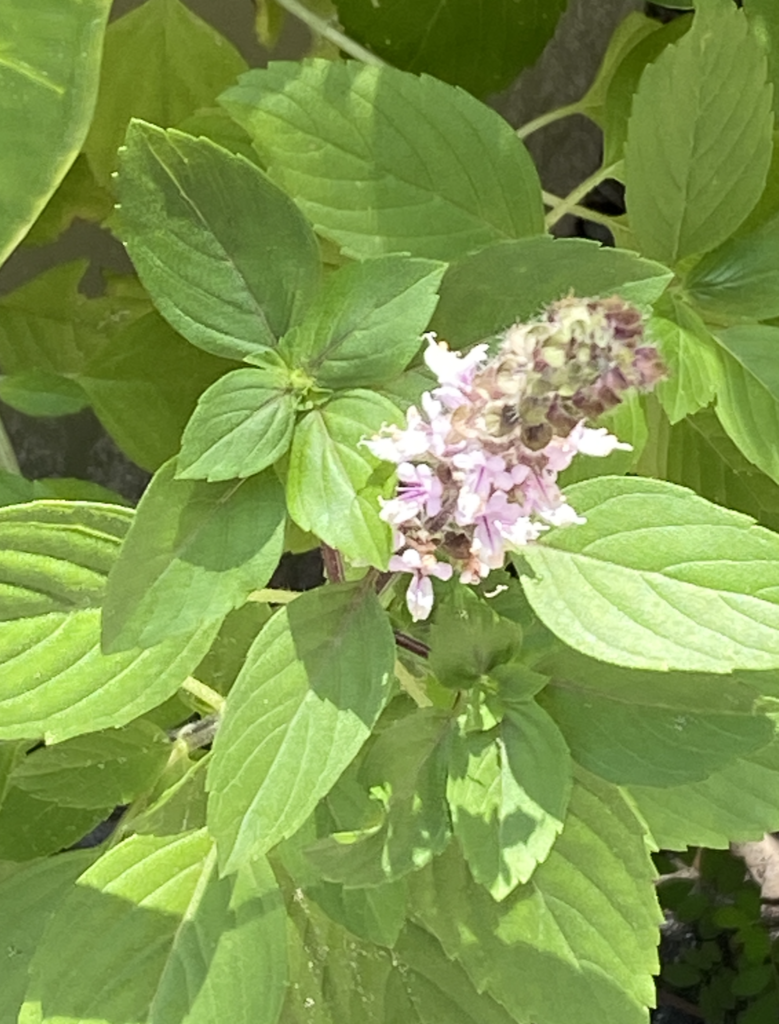
Technically, I suppose I did.
I just didn’t harvest very much.
But I’ve stopped looking at the summer as a complete failure.
I learned some things.
I learned that okra really is one tough Florida vegetable.
I learned that choosing a Florida-friendly tomato doesn’t help much if a hornworm eats the entire thing.
I learned that rabbits will apparently eat things I was quite certain rabbits wouldn’t eat.
And I learned that just because a plant grows beautifully doesn’t mean it’s going to produce beautifully. My Jacob’s Cattle beans made that point quite effectively.
Most importantly, I’m finally beginning to accept something I should have figured out years ago:
I don’t garden in Indiana anymore.
Here Comes the Good Part
And that’s why I’m excited now.
We’re heading toward the months when gardening in Florida starts becoming fun again.
While gardeners in much of the country are beginning to think about putting their gardens to bed, I’m looking at seed packets.
Tomatoes. Beans. Carrots. Greens. Broccoli. Cauliflower.
I’m looking at grow bags and EarthBoxes and empty spaces in the yard and thinking, What can I put there?
I’m starting seeds.
I’m making plans.
And after trimming back the enormous podocarpus along our back fence, I’ve even gained some precious sunshine and a new place for grow bags.
Mommy’s store isn’t exactly open for business yet.
But I’m working on it.
Maybe this summer wasn’t about filling the harvest basket.
Maybe it was about finally learning to garden where I live instead of where I used to live.
After all these years, Florida and I may finally be reaching an understanding.
Ask me again after rabbit season.
How did your summer garden do? Did you have something that absolutely refused to cooperate — or one plant that surprised you and thrived anyway?